Thunk’s ability to translate complex stakeholder needs into clear design artefacts gave us confidence going into Alpha and the GDS assessment.
Ellen Thompson, ASC Workforce Digital Strategy Lead, DHSC
Care workers shouldn't repeat the same training every time they change employer. We designed a portable, trusted way to recognise skills across a fragmented sector. Recognition that travels with them.

The Department of Health and Social Care (DHSC) is the UK government body that shapes health policy and funds the NHS to keep the public well. By shifting focus toward community care and digital tech, it aims to transform a system that treats sickness into one that actively prevents it.

Thunk’s ability to translate complex stakeholder needs into clear design artefacts gave us confidence going into Alpha and the GDS assessment.
Ellen Thompson, ASC Workforce Digital Strategy Lead, DHSC
Adult social care has high turnover and no shared record of who has been trained in what. So a care worker moving employers does the same mandatory training again, and the sector pays for it twice while recruitment slows.
DHSC wanted a digital passport for skills. We ran the Alpha, tested it with people who aren’t confident with technology. It passed GDS accessment and secured the investment to go further.
DHSC had an ambition to give care workers a digital passport so they can carry proof of their training from one employer to the next.
We worked with the Department of Health and Social Care, alongside delivery partners across policy, engineering, and operations, to understand what a Skills Passport would need to do in practice.
Care workers faced repeated training requirements when moving between employers due to a lack of portable proof
Fragmentation across the sector slowed recruitment and undermined staff confidence
There was no consistent standard for what trusted digital credentials looked like in care
Many of the people who most needed this had low confidence with digital services
The Alpha defined an MVP and tested it with low-digital-confidence users, rather than with the people who’d find it easiest.
It passed its GDS assessment, and the prototype and the insight behind it went into workforce reform policy.
Most usefully, it lowered the perceived risk enough to unlock investment towards national scale. For a public programme, getting funded to continue is the desired outcome.
A working prototype modelling data flows, governance and journeys across a future credential network
Mobile-first, built on trust patterns people already recognise
Prototypes and insights supported a successful GDS pre-assessment and informed workforce reform policy
Reduced perceived delivery risk and secured investment to move toward national scale
01
From tracking training to making recognition portable and trusted in a workforce that moves constantly.
02
A working prototype modelling data flows, governance and journeys across a future credential network, tested iteratively with care workers, employers and training providers.
03
People with low digital confidence, rather than the ones who'd find it easiest, because a credential nobody can use is worth nothing.
04
Technical feasibility with the delivery partners, and enough evidence to get through a GDS assessment and a funding decision.
A disciplined hunt for value — the structure to explore the unknown without the usual cost of getting it wrong.

1-hour (remote)
Bring us the thing everyone in your organisation disagrees about. We'll tell you what we'd do, whether that involves us or not.
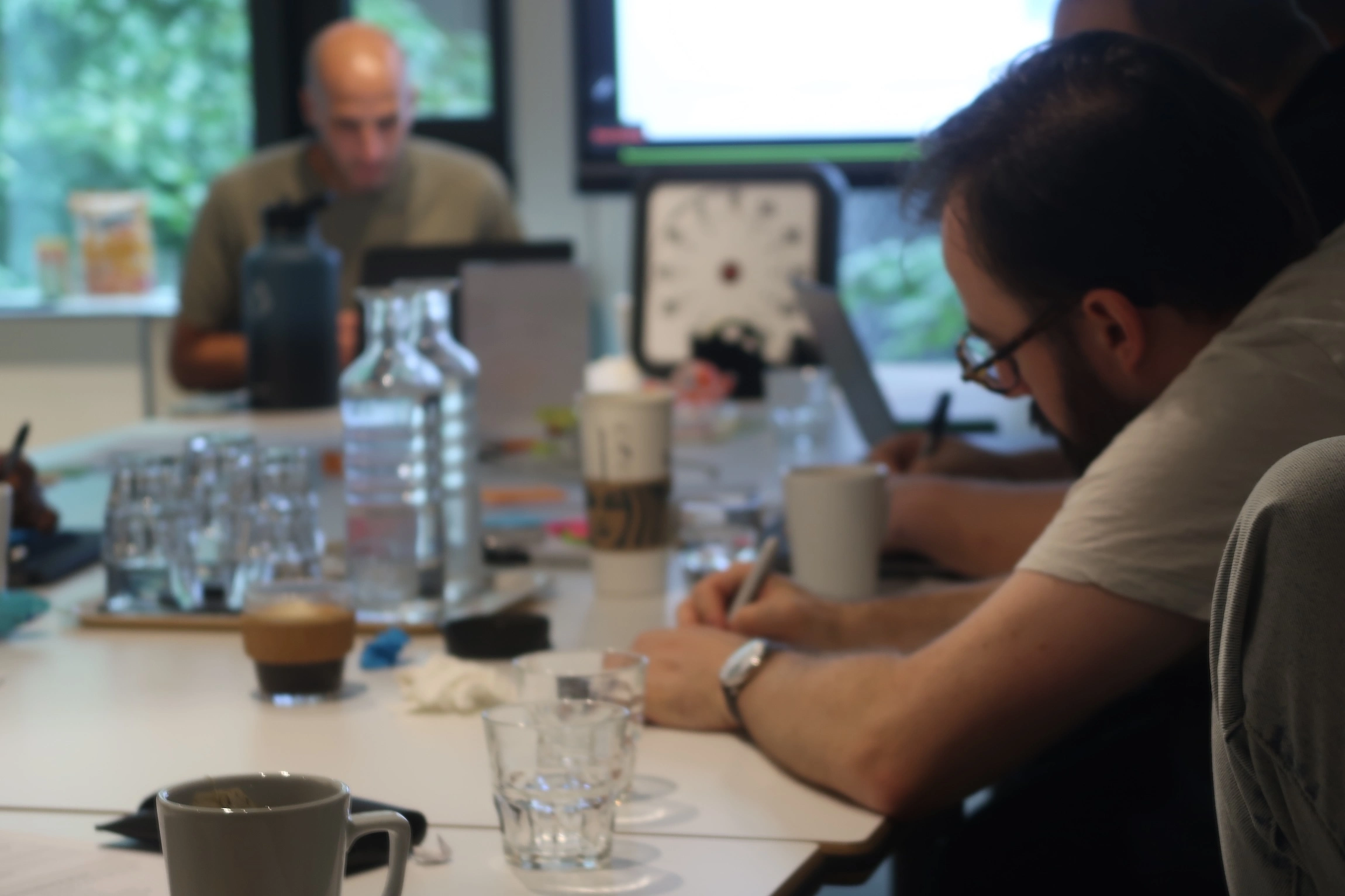
1-day (in person)
One day won't solve everything, but it'll tell you exactly where to start. 'Too many ideas' become one clear plan with the evidence to back it.